Jill Saville - "The Leadership Woman"
+447555 466853
  • HOME
    • The Leadership Woman
    • Contact
  • COACHING
  • MENTORING
  • TRAINING
    • ONLINE Programmes
    • MASTERMIND GROUPS >
      • Past events >
        • Vision Board Workshop
        • Everyone Communicates Few Connect - 29 NOVEMBER 2014
        • Everyone Communicates Few Connect - 16 May 2014
  • PODCAST
    • Podcast transcriptions
  • TESTIMONIALS

Organisations: Don't waste your money!

11/4/2016

Comments

 
I had an interesting conversation some time ago that has stayed with me. It was with a senior member of a company that I was interested in working with to develop their aspiring leaders. The conversation turned to discussing the CEO of the company and their leadership style which when I remembered what I had witnessed when I was training in Guatemala and Paraguay with John Maxwell.

A lot of work goes into preparing the ground before John takes in a team of coaches into a country for what are known as transformation programmes. The critical one is that we have buy in from the top, which includes not only the top of the country but the top of key areas - pillars of influence - such as government, business, social security, education and media.  We have little time once the trainers are there - less than a week - so we have to make sure that it is as effective as possible. I will talk about the transformation programmes another time but the main point is that the top people have to buy in before we start.

So back to the company and the CEO. The description was of an autocratic leader who led through fear and has so far done well so there was no reason to change.....right?  In fact there were many things to change in his behaviour but there was no one on his executive team who dared to give the feedback that was needed - i.e. that the CEO was moody (and therefore behaviour and decisions depended on what mood they were in), didn't listen if someone voiced a different idea and always thought they were right.

Sound familiar?

Now there may be some merit in attempting to develop leaders in that organisation:  leaders who want to behave in a way that makes their teams WANT to follow them rather than have to.  There maybe merit in coaching people who are working too many hours to keep them the right side of burnout. There may also be merit in working with whole teams so that there are pockets of people who what to bring about change.  But that all takes time, especially as this is a large company- and is not tackling the fact that poor behaviours are both modelled and rewarded.

People do what people see.  And if they see that it is best to keep quiet if they want to keep their job and that the style that is rewarded is autocratic, they will behave accordingly if they want to get on.

So until the CEO is convinced that the best way to develop leaders is to model it rather than throw money at it, there is no real value in training just to tick boxes.
Comments

Why bother developing leaders?

7/1/2016

Comments

 
Picture

I had an interesting conversation the other day with an MD of a recruitment company and at one point he asked me ‘why do you try to improve leadership? It seems such an impossible task…’
I pressed him to say more and he said that from his experience there is a huge turnover of staff in many of the companies just because people don’t like their boss. They go in search of a better one. Of course that is great news for recruitment companies so on the one hand, ‘stop developing leaders!’
The challenge for people looking for work is to find a company genuinely interested in people and the sad fact is that in the current climate, established companies, even with poor managers and leaders, find success. So why should they change?
​
This is disheartening for leaders who actually care about people. From a financial point of view, why bother when they can earn  good living by treating people poorly and having a 6 monthly staff turnover?
So I asked him, ‘why do you bother?’
Of course I knew the answer to this question. It is more ethical and he genuinely believes that people have a right to be treated properly.  It is also great for business if people are engaged in what they do and they give more than the bare minimum.
My thought is that how we behave is a choice. We can choose to throw litter out of car windows on the motorway or not leave public toilets as we would like to find them (sorry that is a personal moan!) and we can use phrases like ‘I am keeping someone else in a job as some kind of justification!!’
But really we know it is not right. And treating people badly just because you can is not right either.  Our management and leadership styles tend to develop from people who we have worked for and what we see is rewarded. But we have a choice...
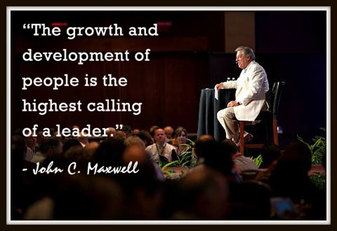
As John Maxwell says, ‘Talent is a gift but character is a choice.

​(Originally posted on Linked In July 2015

Comments

CREATIVE LEADERSHIP

24/5/2015

Comments

 
Picture
How much of your life have you wasted in meetings?


Many people complain that they spend their days in meetings which leaves them working into the night if they want to take any meaningful action. One thing I notice is that whatever length of time is allocated for a meeting, it is all used - or even worse, it overruns: An example of the Peter principle in action- work expands to fill the time available (in a nutshell). Wouldn't it be great if people came into the room, decided what they were there to achieve and agreed to do it in the shortest time possible....? If it took 15 minutes then so be it!


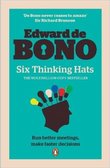
I have been re-reading a few things recently preparing for the Creative Leadership training on 6 June and there has been a little book that has been around since 1985 called SIX THINKING HATS by Edward de Bono. You may not have heard of the book or him but you will certainly have heard of the concept of lateral thinking which he came up with in 1967.

The Six Thinking hats explained another of his concepts - Parallel Thinking. The brain cannot focus on more than one thing at once and decision making involves taking many different factors into account. We can become confused and  'Confusion is the enemy of good thinking.'  We can also become wedded to an idea so our ego goes into a meeting and we want to prove we are 'right'.  That can get in the way of finding the best solution based on all the facts.

De Bono offers another way, one of structured thinking. Imagine that you go through a process considering different aspects in turn with everyone working towards the same thing - the best outcome.  He labels the kind of thinking as 'thinking hats'.

White hat: Neutral and objective - facts and figures
Red hat: The emotional view
Black hat: Cautious and careful - points out the weaknesses in an idea
Yellow hat: Positive - what are the benefits of an idea? Possibilities?
Green hat: Creativity and new ideas
Blue hat: Control, organisation of the thinking process - including the use of the hats

The book explains how to use the hats - for example, you would begin and end with the blue hat thinking to organise the meeting and decide the order of the hats. You may not need to use all of the hats at every meeting.  The red hat gives a way to put personal emotions on the table without judgement or explanation. Some people think that there is no place for emotion in a business meeting but I have read that every decision we make is based on emotion.

Personally, I think that something that has been found to reduce meeting time should be considered in every organisation. One example cited was a problem with an oil rig costing $100,000 a day. The 6 Thinking Hats method was brought into the meeting and it was solved in 12 minutes! 

Are we really so stuck in our ways that we prefer to complain about back to back meetings rather than CHANGE? Go on....dare to be different!


Comments

It's not about position...

16/5/2015

Comments

 
I remember when I got my first job managing people. I was 20 years old and I thought that I would be happy in the role for the rest of my life as I had no aspirations beyond the grand sounding Executive Officer. I only had two poor souls to practice on; both men, both a lot older than me and both thought they knew more than I did. All true!

Many of us are given our first responsibility for other people without any training at all.  At best, someone has seen potential in us to manage people.  At worst, they have just seen that we were very good at our current job! How many of us have worked for people who really do not like managing people? I met a man once who was not happy in the role and the organisation thought coaching would be a good idea.  I asked why he had applied for the role and he said that his wife had thought t was a good idea....Needless to say, coaching was not appropriate.

In the book by John Maxwell, The 5 Levels of Leadership, Level 1 is when you are given a title or position It is a start that we are all grateful for. Some of us fall into the trap of thinking that the title makes us a leader and people should just do what we say.  Here are the pros and cons of positional leadership.

THE UPSIDES
1 It is a good place to begin - we are at the table 
2 We are invested with some level of authority. 
3 It is an invitation to grow.
            'There should always be a relationship between receiving a leadership position and 
                                   fulfilling the requirements demanded by it...'
4 You can shape and define your leadership 
Decide 'who am I?' 'what are my values?' 'Real leadership is about understanding yourself first'

THE DOWNSIDES
Level 1 has 8 major downsides so try not to stay there for too long. Work to move to level 2 (Permission - people follow you because they want to).

1 Having a leadership position can be misleading.
You can walk into your first meetings and think that everything will be easy because you are the boss. People will respect you and listen to you. In fact, if they did not respect or listen to you before, this will not change. There may well be another person in the meeting who people see as the leader.
2 Leaders who rely on position often devalue people.
Positional leaders can place a high value on holding onto their position and getting to the next one. Sometimes they make themselves look better by keeping others down. They sometimes don't even like people- their 'subordinates' are an annoyance.
3 They feed on politics
If position is valued over the ability to influence people, then the environment becomes political - full of manoeuvring with the focus on control.
4 They place rights over responsibilities
Their position brings certain rights and privileges which they want people to acknowledge.  Have you ever noticed that the very people who talk the most about their rights are the people trampling all over yours....?
I love the Margaret Thatcher quote here (just the quote..). 
             'Being powerful is like being a lady. If you have to tell people you are, you aren't!'
5 Positional Leadership is often lonely
It does not have to be. Take people along with you!
6 Positional leaders get stranded
If they do not develop past level 1 quickly they become labelled and do not move any further.
7 Turnover is high
Have you noticed that some teams just cannot attract people to join them and people leave regularly. The saying is that people quit people, not companies. Now of course we all lose people: they should be the low performers not the people with potential.
8 Positional leaders receive people's least, not their best
In order to have a successful business, sport's team, student you have to bring out their best. Level 1 leaders breed clock watchers, 'just-enough' team members and the mentally absent!  This is leadership that just gets by. It is not creative or innovative.

HOW TO TAKE ACTION AT LEVEL 1
1 Stop relying on position to push people
2 Trade entitlement for movement
Don't exercise your rights. Don't become possessive about your perks and never believe that you deserve your position. Leadership is not a right it is a privilege.
3 Leave your position and move towards your people.
      'Let him that would move the world, first move himself!'    Socrates

Remember, there is nothing wrong with having a leadership position. There is everything wrong with having a positional mindset.

Comments

Am I a feminist...?

7/2/2015

Comments

 
My daughter copied me into a post of a few women saying why they were not feminists. The post attracted many comments, mostly from people who disagreed and some brave souls who agreed. I say brave not because I agree with those who disagreed (stay with me...) but because it is easy to post something that supports the majority view.

I had a few thoughts as I was reading the comments and you may be disappointed that some of my thoughts raised more questions than definite positions but here they are.

Firstly, I wondered how something that is based on a 'good' idea i.e. all humans having equal value becomes distorted into something bad.. I remember when I was young - and maybe it is still the same today - there was a term 'do-gooders' that was used as an insult. It was mainly used against beleaguered professions like social workers who may not have got things right all of the time but at least they tried to do something. I think this is similar. 

Secondly, whilst I disagree with some of the 'how' people have tried to move this agenda forward, I whole-heartedly support the 'what'- all people are equal. To have a system that ranks different types of people in an order of perceived value is dangerous and we only have to look at recent history, and in fact current events to see what happens to those not in the majority. 'Cleansing' is another word that now has a different use.

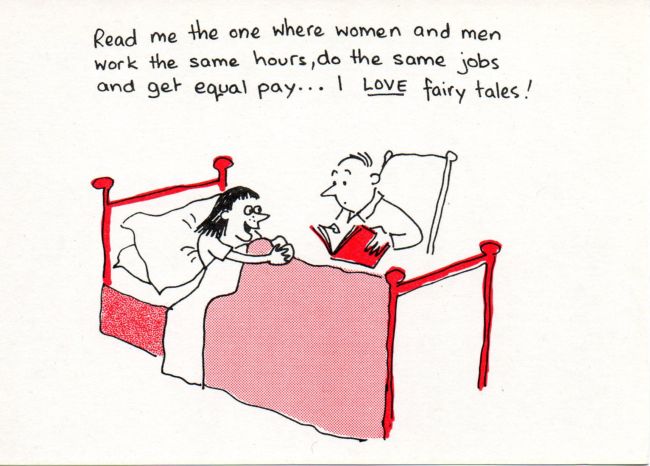
Thirdly, to hold up physical strength as the only quality of a male that is worth anything is a huge disservice to the millions of men who have other qualities and are not 'Mr Muscle'. What I mean is, the idea that women cannot be equal because they are not as strong seems strange. There are some women in the world who are stronger than some men. Where does that leave the men who are less strong than some women? Should they be paid 20% less than other men perhaps....? 

Fourthly (is that a word?), I have known and worked for and with some great men who are able to use a wide range of traits and skills from the spectrum.  I am part of the John Maxwell Team and have people like Paul Martinelli and Christian Simpson as mentors and thinking partners - they are decisive and focused whilst also being collaborative and caring about the people around them. I also know some great women with wide skill sets. The most difficult people to work for, in my experience, are those who are too far along either spectrum - too focused or too caring for example, regardless of whether they are male or female. 

Finally, I wished that the comments on the post were focused more on the topic and less on personal attacks. Everyone is entitled to their opinion and I was left thinking that respect of individuals must be part of the feminist ideal. Demanding to be heard involves listening.
Picture
Comments

Competitor or collaborator.....?

26/1/2014

Comments

 
Picture
I was asked a question the other day and I thought that other people may be wondering the same thing so here's the conversation....

Question
Hi Jill.  I have a ‘networking’ question. I have been sent a LinkedIn request by a lady who is doing something similar to me.  I am really not sure what the benefit is of me being ‘LinkedIn’ with what I would essentially view as a competitor and also why she would request me – we’ve never met and I tend to send requests to people I have met at functions etc. (perhaps I’m a bit ‘old school’). Her business-angle is not the same as mine which is why I say ‘essentially a competitor’. I’m not closed to the idea of connecting as it seems good to have the opportunity to communicate with ‘peers’ but just having a think and wondered if you would share your experience and thoughts on this?


My reply re networking
There are many views on this. From people who are very careful and only connect with those they have met to the opposite end; connecting with anyone. My experience for what it is worth is...

I began by connecting with anyone. I was desperate to get off the mark and I would probably do it again. Why? Because at first I had no value to anyone as a connection so people usually had a good motive.

After a few months of listening to others who were more discerning, I modified my actions and avoided anyone who lived out of my immediate sphere and just wanted my contact list. The exception was JMT colleagues as I connect wherever they are.

Competitors or collaborators....?
I believe in collaboration as the way forward in growing a business. I am in groups of coaches, speakers and trainers, all of whom could be viewed as competition. However, the best things I have achieved have been with other people. If you find someone who needs what someone else delivers, you refer them. In return- because reciprocity is what it is all about- they refer people to you.

You may want to have joint ventures. You may want to pick their brains if they are further forward in the business... a possible mentor?... you may want to just share experiences. Or maybe you have nothing to give each other and the relationship goes nowhere. 

For me, the possibilities outweigh the risks.

I hope this helps
Jill


Comments

New Vision

16/1/2014

Comments

 
Picture
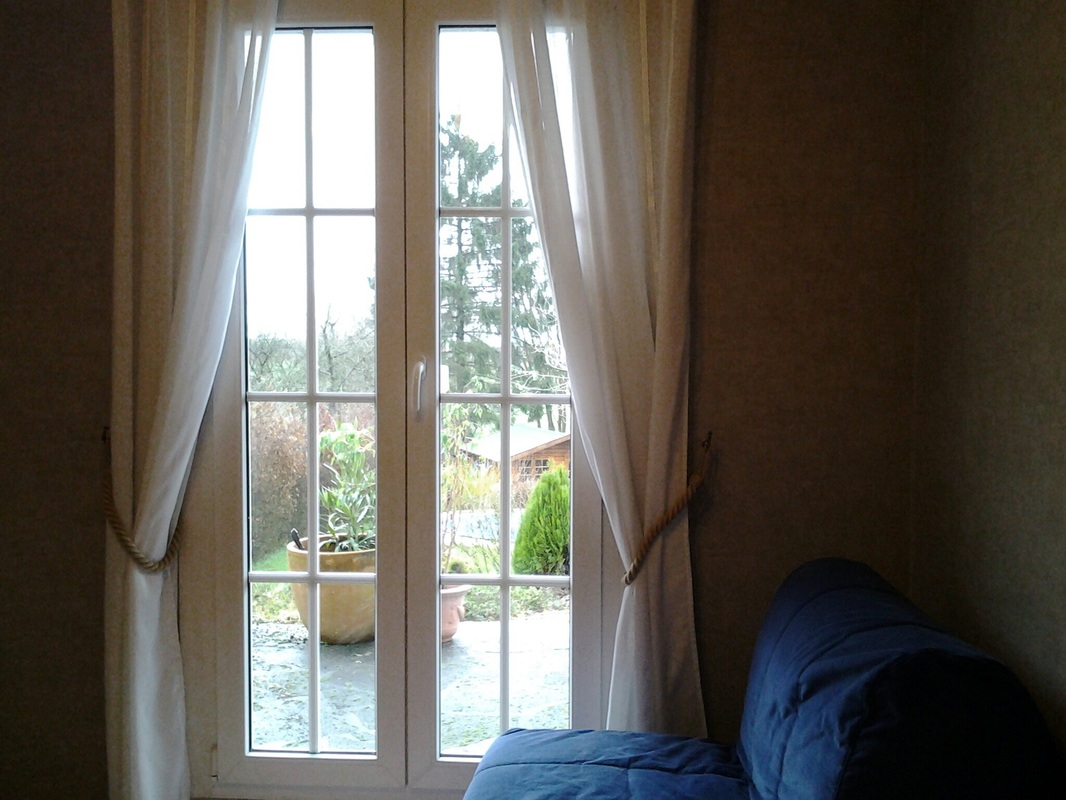
This is the view from my new office space at home. So far, all of the effort has been worth it and everything I have looked for this week I have been able to find! A first!

Now let me say, hurriedly, that it is not a lack of education, a gap in my upbringing, that led me to be disorganised. My oft-remembered Grandma Nellie used to say ' while you've got it in your hand, put it where it goes...' and she got the saying from her mother so we are going back over 100 years. No. Nor was it an inability to realise that I was wasting a lot of time looking for things and I should be tidy.

What I realised this morning - and this will be a disappointing revelation for some, I know - is that I didn't actually know where things went. That is to say, I had not taken the time to decide the best place for everything and make sure they were put back. How could this be I hear you say? Well, we moved into this house 3 and a half years ago and I decided very quickly where to put the furniture, food and clothes. Other things that gradually developed that involved paper and filing, were left around the house or in cupboards depending on the last place I was working!

After spending at least 4 days rescuing abandoned papers from at least 5 rooms in the house,  I now have a PLACE FOR EVERYTHING AND EVERYTHING IN ITS PLACE.....where have I heard that before....?

So this morning, my grandma would be proud, my mother will no doubt recover from the shock one day and I hope my daughter is paying attention!
Comments

Happy New Year everyone!

9/1/2014

Comments

 
Picture


Welcome to the new look website, just in time to move into 2014. I have re-branded so the old Occitane word of dintrar is being removed and my company is now Jill Saville Associates. My professional FB page is Unlocking Posibilities - what a surprise no one has thought to own that before! 

Unfortunately, all previous Blog posts have been lost in the transfer which gives me a great opportunity to create something new.

This year I have had the privilege of working with some great people who are determined to stretch and grow - you know who you are -  and I have also had opportunities for growth myself. 

I was asked to contribute to Leadership Academies for two successful women's networks in Luxembourg and who would have thought that I would ever go to Guatemala with John Maxwell and be part of the country's first steps at transformation?! I flew there thinking that I was giving them the benefit of my experience and I flew back knowing that I had received far more than I had given!

On that trip, I learned to be flexible enough to suspend the need to know who and where I was training each day as there was some confusion over logistics... the only thing I knew was what to say when I got there     (I had been taught the day before!).   I also had the opportunity to work through some wonderful young people from the International School in Guatemala City who wanted to be involved in  the transformation of their country and acted as interpreters. They were good enough to give me feedback on just how much to say before handing over to them. Fabulous!

Technology has given me the opportunity to go, virtually, to every continent, although Skyping to India was challenging due to the connection. I hope that 2014 will enable me to physically travel more and connect with many more people on their own personal journey - and mine.

Look out for the new leadership development groups starting in February and if you have already attended one please recommend to all your friends:)
Best wishes for a bright future
Jill


Comments
Forward>>

    Read my Blog

    Jill Saville is an Executive coach, speaker and leadership trainer 

    Archives

    March 2021
    January 2021
    March 2019
    March 2018
    February 2017
    November 2016
    August 2016
    June 2016
    April 2016
    January 2016
    May 2015
    February 2015
    January 2014

    Categories

    All
    Influence
    Leadership

    RSS Feed

Picture
Notts, UK